
The weather this spring has been dreary, to put it mildly. Almost every day has been rain, clouds, and more rain. It’s about time we shared a secret that has helped us get through it.
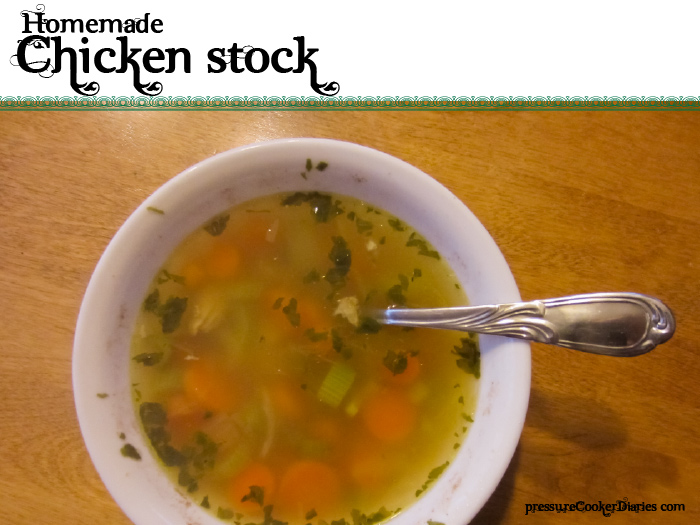
All the dreariness has put us in the mood for many more batches of Pressure Cooker Chili (I just don’t think I’ll tire of the stuff) and for homemade chicken Soup.
Homemade chicken soup is best when made with homemade chicken stock from the bones of a roasted chicken, which we just happened to have from a delicious dinner I made over the weekend.
Normally roasting a chicken takes all day, and then making stock takes all of another day. “Phew!”… It’s delicious, but certainly not cut out for a quick weekday meal plan. When I found a pressure cooker recipe that made stock in half an hour, I knew I had to try it. I was excited to see how pressure blasting the vegetables in the stock would enhance the flavor, and I wasn’t let down with the resulting robust homemade chicken stock.
“What is a soup kitchen?” - Paris Hilton
Instead of spending all afternoon making this soup, I was able to spend about 1 hour (including cook time) and came out with what was voted by Ryan (and me!) as the best tasting soup I’ve made to date.
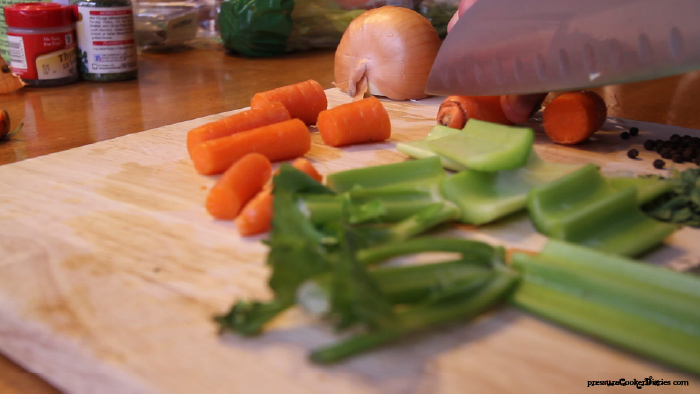
How to make chicken stock:
Making this stock is so easy. All you need are:
1 carcass and bones of a small chicken (about 3lbs), most meat removed and set aside for the soup (or eaten for last night dinner!)
8 cups of water
1 large onion, loosely chopped
2 large stalks of celery, loosely chopped
2 medium carrots, loosely chopped
1 Tbl dried parsley, or 1 bunch fresh
1tsp dried thyme, or 4 sprigs fresh
½ tsp dried minced garlic, or 1 large fresh clove
1 tsp whole peppercorns
2 bay leaves
Step 1: Add the ingredients and water
First you want to dump the chicken bones in the pressure cooker and cover with the full 8 cups of water. I found that some of the ribcage stuck up above the water, so I ripped the bones into smaller pieces to get them more covered.
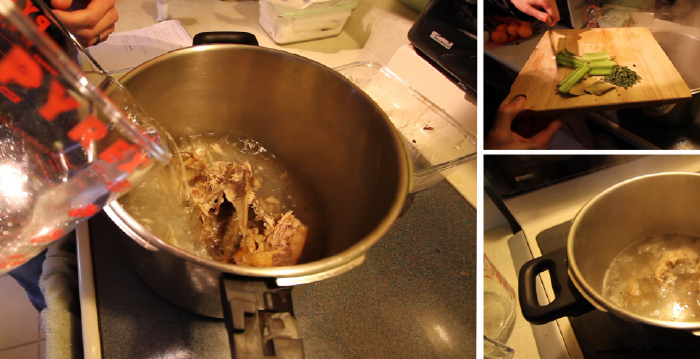
Then add everything else: all the spices, the chopped onion, carrots, celery, and bay leaves. Feel free to use good veggies that may now be less than perfect for this portion – you will be straining them out later, so it’s a good time to use up what’s in the fridge.
Step 2: Boil
Bring the whole pot to a boil and skim off any foam before putting the lid on the pressure cooker.
Step 3: Pressure Cook
After removing the foam, bring the pressure cooker to pressure for 30 minutes.
After the time is up, remove the pressure cooker from the heat and follow instructions for the natural release method.
Step 4: Strain
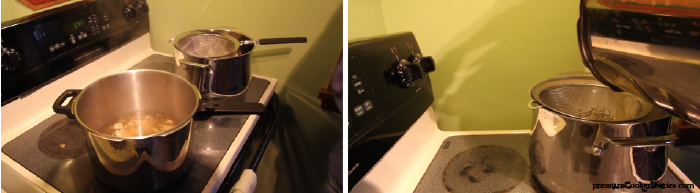
After cooling to equal pressure, open the lid (away from you), pour the stock through a strainer to remove the bones and obliterated vegetables. You should be left with delicious yellow stock.
*NOTE: Feel free to change the proportions of spices, or add and remove them to match your favorite stock recipe; the principle idea and timing will always be the same.
Step 5: Make your soup
When the stock is done all you have left to do is make soup! I usually pick off any remaining meat from the strained bones, as well as adding back some of the larger pieces of meat that I had taken off before cooking the stock. Besides meat, we love soup with a ton of veggies: another whole onion (diced), 4-6 whole carrots (diced), 3-4 celery stalks (diced), more freshly ground black pepper, a dash of salt, a few dashes of paprika, and a few more shakes of parsley. I do most of it to taste, without measurements. Bring the whole thing to a boil until the vegetables are cooked through and ready to eat.
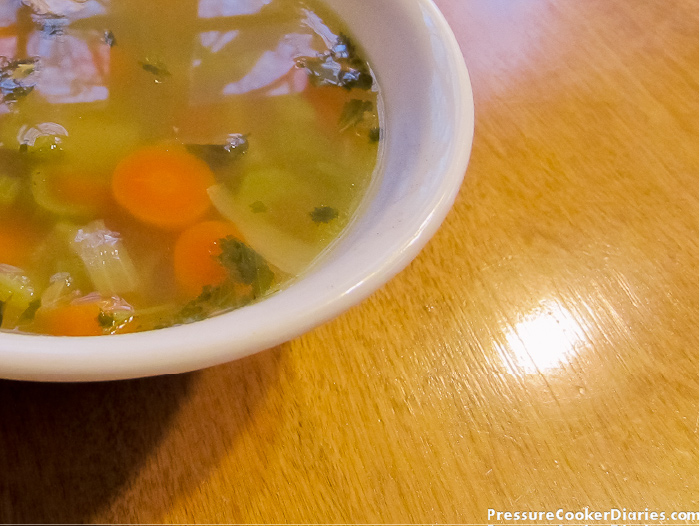
Here is our official pressure cooker homemade chicken soup recipe.
You can also add noodles, rice, and any other vegetables you think would be delicious. In the past I’ve added turnips, parsnips, even spinach, and they’ve all been great.
Nothing like good old comfort food on a dreary and rainy day…
Looking for the non pressure cooker 8 hour chicken stock recipe?
Nothing beats Alton Brown’s.
Thanks for reading.
"I was 32 when I started cooking; up until then, I just ate." ~Julia ChildWhy learn pressure cooking?
It's 7 pm. The end of the work day stomach rumbles...
In one hand, a take out menu. In the other hand, the refrigerator door...its contents staring back almost as blankly as we are towards them. We want a homemade meal, but also want something quick and simple to make.
1. Simple and quick recipes requiring basic skills to become proficient in the kitchen.
2. Quality ingredients, not necessarily 100% organic, but meals without artificials and chemistry class additives.
3. To understand more of the story of our food and take small steps towards self-reliance. It's true, there are many benefits to pressure cooking: the time savings, the taste, a small step towards self-reliance, sustainability... but the real benefit is in what we learn as we redefine our relationship with food. Good food can be fast. Good food can be easy.

- Turkey Stock - Making Turkey Stock in a Pressure Cooker
- Homemade Chicken Soup Recipe
- How to Make Tomato Soup - Quick Homemade Tomato Soup Recipe
- How to Cook a Turkey in a Pressure Cooker - Our Adventure Cooking a Turkey in 1 Hour
- How to “Roast” a Chicken - 25 min “Roast” Chicken Recipe in a Pressure Cooker




{ 6 comments }
I used your recipe as the basis, but added ginger slices, star anise, and green onions along with the regular onion. I also added about a cup and a half of a cheap dry sherry or chinese wine which tastes like brake fluid, but is excellent for cooking. I also recommend adding dried shitake mushrooms for an added level of flavor and some chinese soy sauce. This makes a broth great for wonton soup or for steaming chicken, or to add to stir fried vegetables.
@Kerry That sounds like it would make a great base for Asian flavored soups. I just had “Oriental Beef Noodle” today for lunch and was thinking about how to make a good broth. Thanks for the suggestions!
How many pounds of pressure do you use?
thanks for recipe!
I tend to prefer to make my stock plain and simple. I will save the bones from a roasted chicken, and store it in the freezer using a one gallon sized freezer bag. Then I will take the bones of two chickens, add sixteen cups of water, some salt and pepper to taste, and then pressure cook it for 45 minutes when I’m ready to make stock. Then I chill the stock overnight, and freeze it in two cup servings. I know of some folks who freeze stock in ice cube trays and then keep the cubes in freezer bags.
My reason for keeping things on the plain side is so I can use the stock in a variety of recipes. Veggies and other herbs can be added to whatever the stock is being used in. The combination of flavors that work well in chicken and noodles may end up not complementing other dishes.
More recently, I have made ham and beans using my pressure cooker, and I used some of my reserved stock as well as water. I threw in some smoked ham hocks with the beans, and that added a ton of flavor. A thick stock can be very versatile in the kitchen, and I am a big fan of using my pressure cooker. I’ve tried making stock in the crock pot, and did not get satisfactory results.
i would like to know soiumd count in 8 cups of booth not soup if possable im a very low soiudm deit and trying to find a lower souimd booth then cans thanks julie
Hi - just found your site and love it. I’ve been pressure cooking for a few years but not as often as I really should. I have made my own chicken and beef stock though I haven’t let it percolate for as long as you do - will have to try letting it go a little longer. I strain the results and put in large bowl in frig overnight so fat will congeal on top. Then remove fat and portion out into ziplock bags in 2 cup measures and store flat in freezer. Very handy. I’ll be back to see more of your recipes.
{ 1 trackback }